![logo-mark-primary-color-4.png]](https://support.apicbase.com/hs-fs/hubfs/logo-mark-primary-color-4.png?height=40&name=logo-mark-primary-color-4.png)
There are two excel import files that manage ingredients data: "Ingredient" Excel import and "Ingredient's Packages" Excel import. The "Ingredient" Excel import is used to create ingredients with general information like allergens, nutritions, etc. Click here if you want to read up on this file.
Adding packages and pricing data to these ingredients is done with the "Ingredient's Packages" file, which is discussed in this article. If you want to learn more on importing ingredients, read our extensive guide on this topic.
You can also import packages with Smart Import. It reads your supplier's own file with AI, so you do not have to fill in the template first. Smart Import needs AI to be switched on for your library; the template works in every library. See "Importing packages with Smart Import" at the end of this article.
Go to Products > Ingredients and select Import & Export > Import > Packages > From Excel.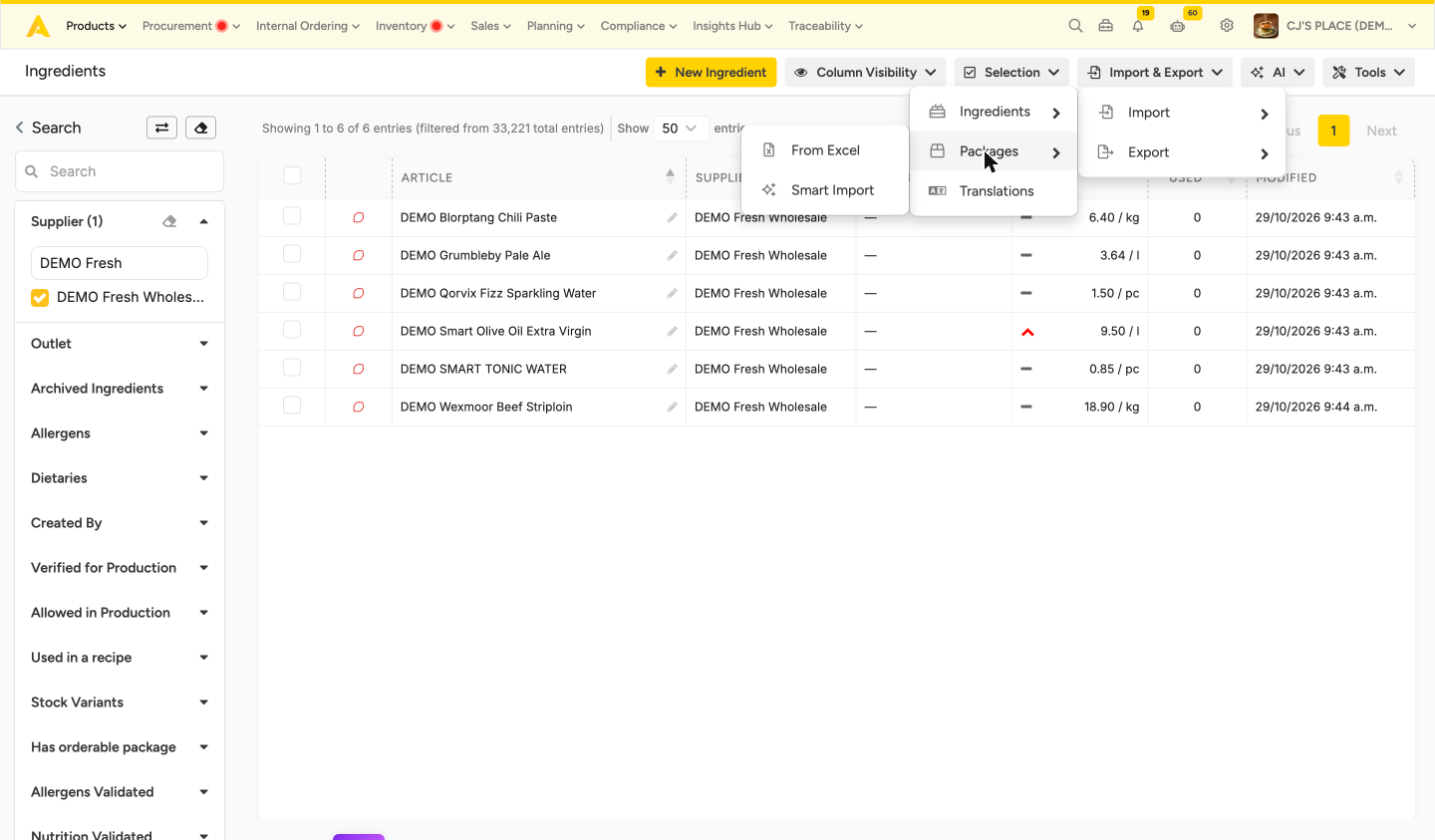
On this page, you can download an empty template (recommended if you are creating new ingredient packages) or a sheet with all your active packages filled in (recommended if you are updating existing ones).
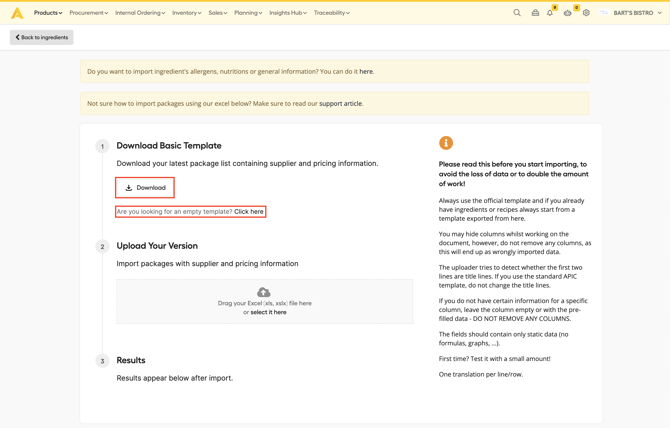
Now that you have downloaded the template, you are ready to start. If you want to learn more about how to fill in the template, check out this article.
- Once you are done adding package and supplier info, save the file, and return to the Apicbase Manager import page for the ingredients file.
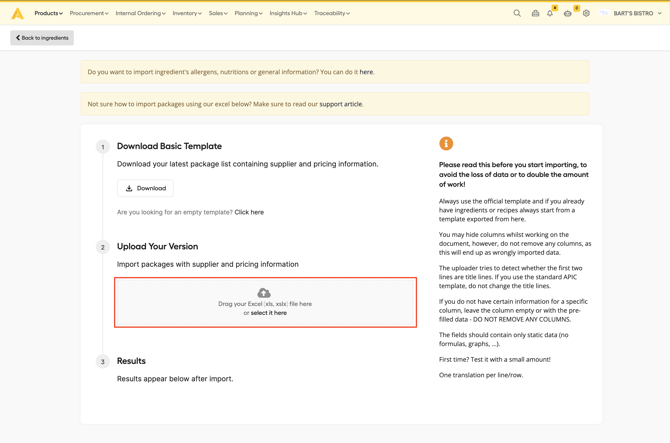
- Locate "Step 2".
- Drag and drop or upload the Excel file onto the designated area.
- The upload will begin automatically.
- While importing the file, you will get a popup that lets you either stay on this page or go to the "Import Page".

- On the "Import page" you will find an overview of all your imports including the latest. It will show you:

- Date of the import
- Name of the imported file
- Type of the import (ingredient or package file)
- Description of the import
- Requested by
- Progress of the upload
- Error file: Here you can download the ingredient import file with only the entries that have errors. You can download this file by clicking the "Download" button, correct the errors and upload it back via "Step 2" the original import screen.
- Imported File: You can use this to check the file you have uploaded
- Details: When clicking "Show", you will get the details on errors or warnings from this import. It will say what happened on which row of the import. You can use these details to correct the error file in the former step. The rows with warnings are imported and don't necessarily need correction if the info in the details is correct.

Importing packages with Smart Import
Smart Import reads a supplier file as it is: a price list, an invoice, a delivery note or a photo of one. AI picks out the products, package sizes, article numbers and prices, and you check every row before anything is saved.
You can use Smart Import when AI is switched on for your library. If you do not see it, ask your Customer Success Manager. Your library role needs the Edit permission for ingredients, and Manage suppliers if the import has to create a new supplier.
- Go to Products > Ingredients and select Import & Export > Import > Packages > Smart Import. You also find it in the AI menu as Smart Package Import, and on Products > Stock Items under Import & Export > Import Packages > Smart Import.
- Drop your file on the upload area or click to browse. Excel, CSV, PDF and images work, one file at a time. Under Options you can set one supplier for all rows with Pre-select Supplier, and give the AI extra context in Additional Instructions, for example "prices are per kg".
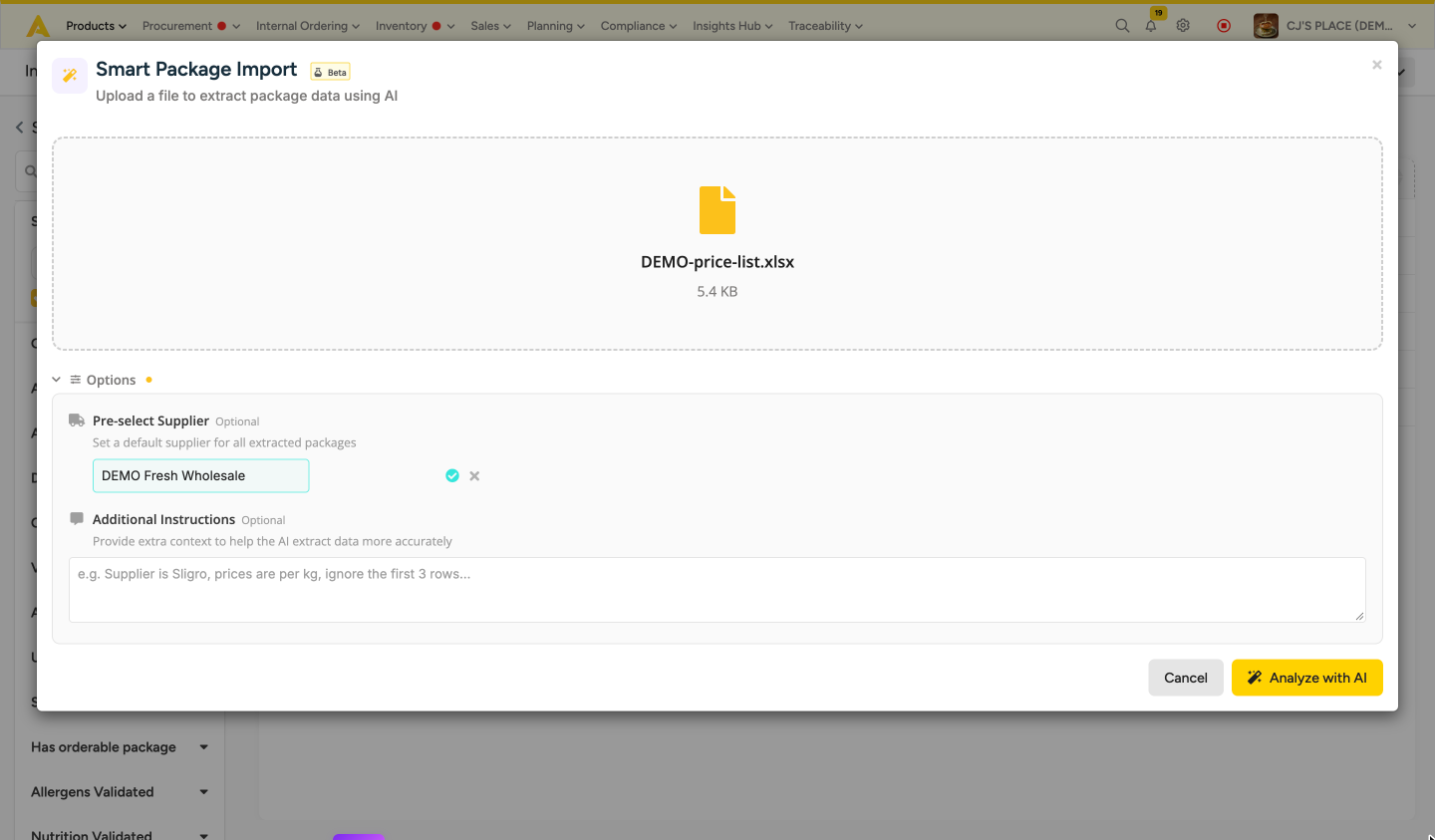
- Select Analyze with AI and keep the window open.
- Check the rows. Each row shows whether it adds to an existing ingredient or creates a new one, and whether the package and the supplier package already exist. Edit any cell, pick another ingredient or supplier from the list, remove a row with the cross, or add one with Add Row. Check the Price Unit column in particular: Per pack means the price is for the whole package, a unit such as kg means the price is per kg.
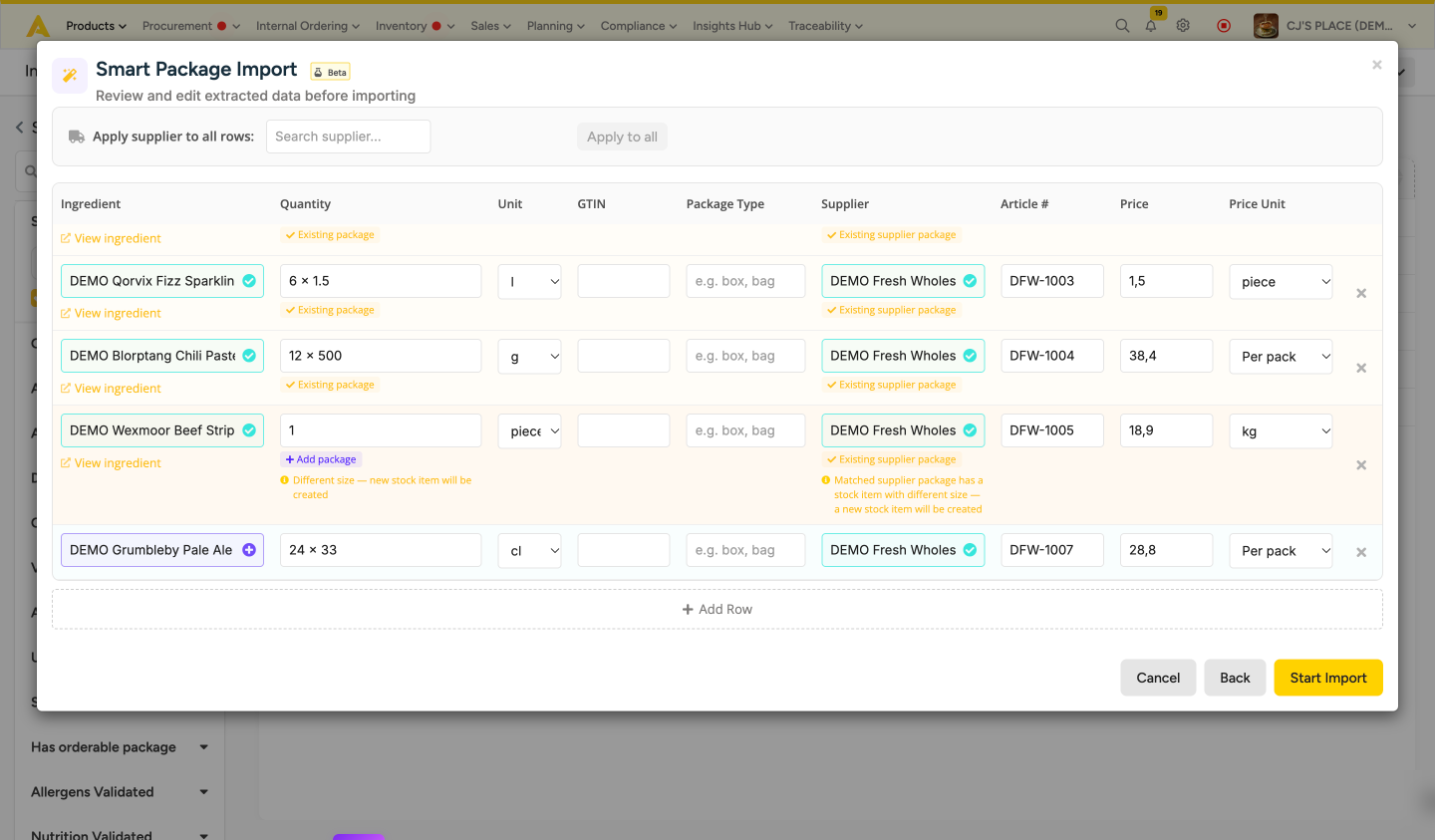
- Select Start Import. You can do this once every row has an ingredient.
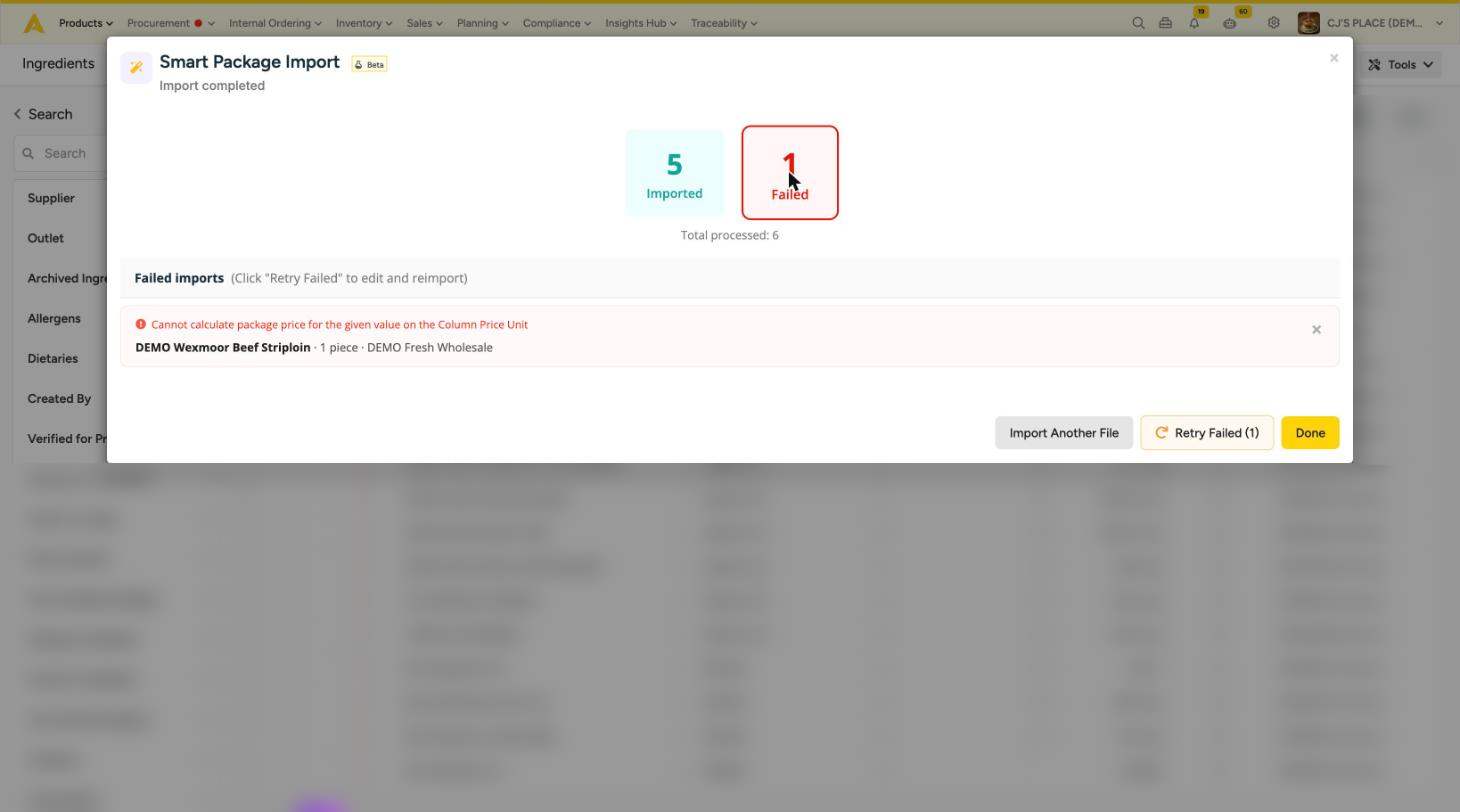
- The results show how many packages were imported, with Warnings and Failed tiles when there are any. Click a package to open its ingredient. Select the Failed tile to see why a row failed, then Retry Failed to put those rows back in the grid, correct them and import again. Import Another File starts over and Done closes the window. Refresh the ingredient list to see the new and changed ingredients.
The import saves what the grid holds, also on packages you already have. An empty GTIN or Package Type cell removes the barcode or package type of an existing package, and the supplier's product name is cleared when the file has none. Fill in the cells, or remove the rows of packages you do not want to change. A row matched to an existing ingredient also gives it the name from the file: to keep the current name, type it in the Ingredient cell.
Supplier packages in the file are set to orderable, also when they were not orderable before.